

和算2.0
Wasan2.0
AIが「何を、なぜ、どう判断したか」を、後から誰でも同じ手順で確認できる。
その設計思想の系譜は、江戸和算に始まり、岡潔・湯川秀樹を経て、AIの時代へ続く。
A design philosophy for making AI decisions verifiable by anyone, after the fact.
Its lineage runs from Edo-period Wasan, through Oka and Yukawa, into the age of AI.
和算2.0とは
Definition of Wasan 2.0
江戸時代、数学者たちは答えより「手順」を大切にしました。難問を解けば、その手順を神社に算額として奉納し、誰でも検証できるようにする。「私が正しく解いた」ではなく、「誰でも同じ手順をたどれる」ことが信頼の証でした。そしてもう一つ——無限の精密さを追うより、「ここまでは確実に言える」を足場にする。重要な箇所を区切って積み上げていく。それが和算の核心です。
岡潔は、数学的真理は論理より先に「情緒」として把握されると語りました。手触りとして「これが正しい」とわかる感覚を、数学の出発点に置いた人でした。湯川秀樹は、力が届く範囲には限りがあるという場の理論を提唱しました。どこまでが確実に言える領域か、物理の言葉で区切ってみせた。二人に共通するのは、「ここまでは確かだ」という感覚的な確実性を足場に、そこから積み上げる姿勢です。
そして今、AIは優秀な答えを出します。しかし「なぜその判断をしたのか」を後から検証する仕組みがありません。AIの正しさは「信じてください」で成り立っています。 和算2.0は、この「信じてください」を「数学的に確認できます」に変えるための設計思想です。手順を公開し、範囲を明示し、誰でも再実行できる形で証拠を残す——江戸和算の精神、岡・湯川の確実性の感覚、そしてAIという新たな計算主体。三つが交差する地点に生まれました。
I
In Edo Japan, mathematicians valued procedure over answer. When a problem was solved, its procedure was inscribed on a sangaku tablet at a shrine—public, verifiable by anyone. "I solved this correctly" mattered less than "anyone can retrace these steps." And one more thing: rather than chasing infinite precision, Wasan worked from "here is what we can say with certainty"—bounding each claim, building upward. That was the heart of it.
Oka Kiyoshi believed mathematical truth is grasped as emotion before it is proven in logic—a felt sense of rightness that precedes the formal argument. Yukawa Hideki proposed that forces reach only a finite distance: you can draw a boundary around what is physically certain. Both men shared a stance: start from what you can genuinely grasp, then build from there.
Today, AI produces excellent outputs. But there is no mechanism to verify after the fact why a decision was made. AI accountability runs on "trust us."
Wasan 2.0 is the design philosophy for replacing "trust us" with "you can verify this mathematically." Publish the procedure. Make the boundaries explicit. Leave evidence anyone can retrace. It emerges at the intersection of three things: the Edo spirit of procedural transparency, the intuitive certainty of Oka and Yukawa, and AI as a new kind of computational agent.
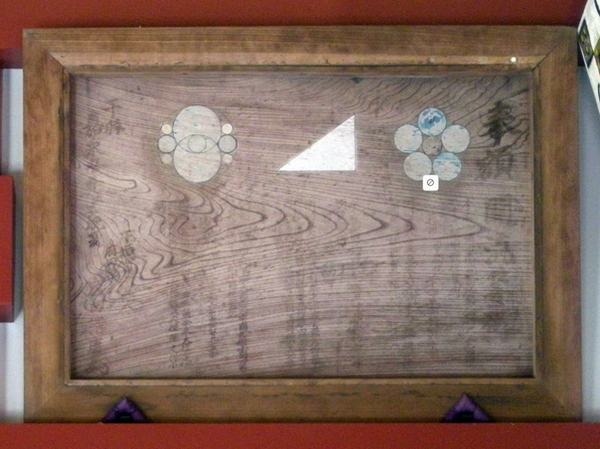
天満宮 (池田市) 算額
和算の問題や解法を神社仏閣に奉納し、公開された場で共有していた歴史文化を示す例です。
In wasan, mathematical problems and solutions were sometimes dedicated to shrines and temples, where they could be viewed and considered by the public.
和算2.0の定義
Definition of Wasan 2.0
有限資源下での計算・制御・意思決定を、有限閉包+Beacon(観測点固定)+正値性下界(δ_pos)+Σ₁台帳(ADIC)としてOS水準に再実装するための、文化系譜を伴う技術フレームです。
設計の核は三原則: ① 無限延期をしない — 有限の窓の中で必ず正の下界(δ_pos)を確保します。 ② 有限で閉じる — 計算と責任の範囲を数学的に決定可能にします。 ③ 第三者が再現できる形に出力する — 結論への過程を Σ₁証明書としてコンパイルします。
和算2.0は実装核ではありません。技術核を文化言語で正確に提示し、AIおよび社会システムへ接続するための翻訳の枠組みです。
A technical framework—articulated through a cultural lineage—that re-implements computation, control, and decision-making under finite resources as: finite closure + Beacon + positive lower bound (δ_pos) + Σ₁ ledger (ADIC).
Three core principles: ① No infinite deferral. A positive lower bound (δ_pos) must be secured within the finite window. ② Close finitely. The scope of computation and accountability is mathematically decidable. ③ Compile to a verifiable certificate. The path to every conclusion is output as a reproducible Σ₁ proof.
Wasan 2.0 is the translation framework that connects the technical nucleus to AI and social systems.
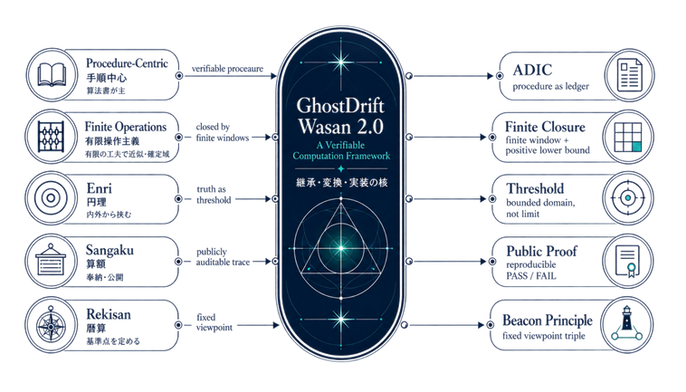
System Architecture — 4 Layers
Prime OS Kernel
四層構造は、四人の先人の問いに対応しています。
The four-layer architecture maps to the question each predecessor asked.
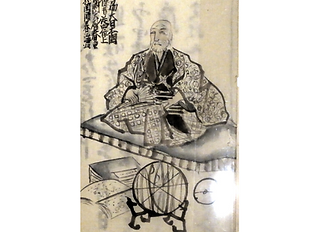
LAYER I — 渋川春海 / Shibukawa(Finite Observation)
暦を修正した江戸の天文学者。「何を基準点にするか」を決めることが、世界モデル化の出発点だと体現した人物です。
観測データは有限かつ離散的。連続的な滑らかさを前提にしません。有限の観測点のみで世界モデルを構築し、Beaconを固定します。
Edo astronomer who corrected Japan's calendar from finite observations alone. Observation data are finite and discrete. The world model is built strictly from finite observation points. This layer fixes the Beacon.
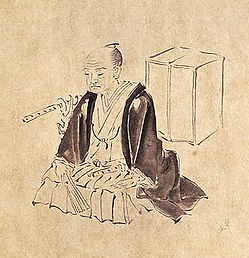
LAYER II — 関孝和 / Seki(Rigorous Inequality)
行列式をライプニッツとほぼ同時期に独自に発見した江戸の数学者。「極限に近づく」のではなく「上下から挟んで確定させる」という態度で数学を展開しました。収束仮定ではなく、不等式による上下界の保証で結果を確定します。AIの出力も、近似値ではなく「絶対に超えない上下界」として提示します。
Edo mathematician who independently discovered determinants around the same time as Leibniz. Results are fixed by squeezing from above and below with inequalities—not by convergence assumptions. AI outputs are presented as guaranteed bounds, not approximations.
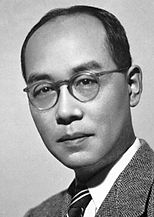
LAYER III — 湯川秀樹 / Yukawa(Potential Cutoff)
日本初のノーベル賞物理学者。核力が有限距離でしか届かないという「湯川ポテンシャル」を提唱し、作用範囲を区切ることで物理的責任範囲を明確にしました。無限遠まで続く相互作用は計算責任を曖昧にします。有限の相互作用距離(ポテンシャル遮断)を導入し、計算と責任の範囲を明確に区切ります。有限閉包を構築し、計算責任を可判定な状態にします。
Japan's first Nobel laureate in physics. Proposed that nuclear forces reach only a finite distance. Infinite-range interactions make accountability ambiguous. This layer bounds the domain of computation and responsibility, making accountability decidable.
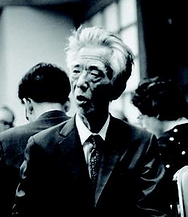
LAYER IV — 岡潔 / Oka(Global Coherence)
多変数複素関数論の難問を解いた20世紀の数学者。「数学的真理は関係が生む情緒として把握される」と説き、局所最適化が全体整合を壊すことを示しました。局所最適化のみを追求すると、全体の整合が失われます。多変数的な構造整合を維持しながら局所を制御し、有限系全体の大域的整合を保持します。
20th-century mathematician who solved hard problems in several complex variables. Held that mathematical truth is grasped as the "emotion" born from relationships. Local optimization alone can silently destroy global coherence. This layer enforces coherence across the whole finite system.
派生:責任工学・AI説明責任プロジェクト
Derivatives of Wasan 2.0
和算2.0は文化概念にとどまりません。 有限観測・不等式確定・有限閉包・大域整合という四層構造は、具体的な実装体系へと展開されています。その代表的な派生が、責任工学(Responsibility Engineering)およびAI説明責任プロジェクトです。
Wasan 2.0 is not merely a cultural concept.
Its four-layer structure—finite observation, inequality-based determination, finite closure, and global coherence—extends into concrete implementation frameworks. The two principal derivatives are Responsibility Engineering and the AI Accountability Project.
1. 責任工学(Responsibility Engineering)
和算2.0の「無限延期を許さない設計思想」を、責任固定の工学原理として実装します。 Beaconで責任境界を固定し、有限閉包(UWP)で影響範囲を限定し、δ_posで安全下界を保証し、Σ₁台帳(ADIC)で第三者検証可能な証明書を発行します。 これにより、責任は倫理ではなく、停止可能・検証可能な数理条件として確定されます。
Responsibility Engineering implements Wasan 2.0’s design principle of refusing infinite deferral as a responsibility-fixation architecture.
Beacon fixation establishes explicit responsibility boundaries.
Finite closure (UWP) limits the domain of influence.
δ_pos guarantees a positive safety lower bound.
The Σ₁ ledger (ADIC) issues third-party-verifiable certificates.
Through this structure, responsibility is not treated as a moral appeal but as a stoppable, verifiable mathematical condition.
2. AI説明責任プロジェクト(AI Accountability Project)
AI出力を近似値の提示で終わらせず、不等式による上下界保証と外向き丸めにより、証明可能な形式へ変換します。 出力は保証付き区間として提示され、Σ₁形式の証明書として保存され、第三者が再検証可能です。 これにより、AIガバナンス・安全性・倫理を数理的基盤に接続します。
AI outputs are not left as approximate predictions.
By enforcing inequality-based upper and lower bounds and compiling them into outward-rounded rational lower bounds, outputs are transformed into provable forms.
Results are presented as guaranteed intervals, preserved as Σ₁-certifiable certificates, and made reproducible for third-party verification.
In this way, AI governance, AI safety, and AI ethics are grounded in a formal mathematical infrastructure rather than abstract principles.
出典写真・画像クレジット
・天満宮(池田市)の算額
画像:Bittercup「Tenmangu-ikeda 04.jpg」/ Wikimedia Commons / CC BY-SA 3.0 / 変更なし
出典:https://ja.wikipedia.org/wiki/ファイル:Tenmangu-ikeda_04.jpg
ライセンス:https://creativecommons.org/licenses/by-sa/3.0/deed.ja
・渋川春海
画像:渋川春海『天文大意録』より / Wikimedia Commons / Public domain / 一部トリミング
出典:https://commons.wikimedia.org/wiki/File:Shibukawa_Syunkai_from_Tenmon-Taii-Roku.jpg
・関孝和
画像:関孝和 / Wikimedia Commons / Public domain / 一部トリミング
出典:https://commons.wikimedia.org/wiki/File:Seki_Kowa.jpg
・湯川秀樹
画像:湯川秀樹 / Wikimedia Commons / Public domain / 一部トリミング
出典:<使用したCommonsファイルURL>
・岡潔
画像:岡潔 / Wikimedia Commons / CC BY-SA 2.0 Germany / 一部トリミング
出典:https://commons.wikimedia.org/wiki/File:Kiyoshi_Oka.jpg
ライセンス:https://creativecommons.org/licenses/by-sa/2.0/de/deed.ja